Webcasts

RSS
  • Feb. 14, 2013
    webinar

    Wi-Fi vs. Cellular vs. Zigbee – How to Choose the Best Wireless Platform for Your Next Project

    Technological advances and economic forces are expanding the boundaries of networks and incorporating locations that were previously unreachable. As IP-based protocols become the standard for inter-operability, end users are beginning to demand that all connectivity designs be IP-based, enabling a suite of customer-selected management tools and infrastructure choices. Wireless will inevitably become the medium of choice for remote systems. Wireless networks will no longer be the preserve of niche specialty technologies; they will mature into standards-driven systems that can be more fully embraced by the industrial market. There is no single best answer for all applications. Evaluating where and how to use wireless technologies, and how to compare the functions and features of multiple forms of wireless to find the best option for your project will be the focus of this presentation. Conley and Fahrion will discuss the ways in which wireless data communications already blur the boundaries at the edge of the network and how the definition of the “field” changed when geographically dispersed locations are all part of the same seamless, connected network. They will explain how emerging wireless technologies can be adapted into existing networks and discuss the advantages of blending legacy technology with the latest innovations. For example, embedded wireless access points can network-enable old serial devices, allowing them to communicate with even the very newest iPads, iPhones and Android devices....More
  • Feb. 12, 2013
    webinar

    Test Wireless Designs with Low-Cost RF Vector Signal Generator

    If you design devices that use IQ modulation, you face a continual bandwidth crunch in a spectrum that is filled with interference, so testing your devices via signal simulation is critical. You need to generate a high-quality, known, good signal and be able to easily add real-world distortions to the signal to test the limitations and robustness of your designs. Now you can combine two low-cost Agilent instruments to create an RF vector signal generator at a fraction of the cost of off-the-shelf vector signal generators. Use a 2-channel 33522B waveform generator with unique technology that offers excellent baseband IQ signal generation and a N9310 RF signal generator with optional IQ inputs as the RF modulator. In this webcast, we will look at how 33500B Series waveform generators with the IQ Signal Player option for generating IQ signals. We will first discuss the 33500B’s performance and how its exclusive Trueform waveform generation technology can help you produce more accurate signals. We will also look at how easy it is to move your IQ signals from software to a 33500B Series waveform generator for play back. Finally, we will look at the 33500B Series’ built-in features for simulating quantitative non-ideal conditions on an IQ signal for testing the limits of your design....More
  • Jan. 18, 2013
    webinar

    Physical Layer Test Challenges and Solutions for MIPI Interfaces

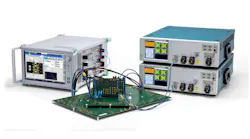
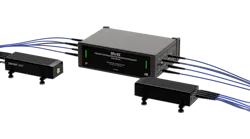
    The Mobile Industry Processor Interface (MIPI) Alliance standards body standardizes interfaces for mobile applications and designs. The MIPI D-PHY and M-PHY are introduced as high-speed physical layers, which are used in multiple applications such as camera, display, memory and baseband. Other protocols including USB 3.0 and PCIe are also in the process of being adapted to work with the M-PHY physical layer as well. Since D-PHY and M-PHY are optimized for performance and power consumption, there are many new validation challenges. In addition, they have to comply with the requirements outlined in the MIPI Conformance Test Suites, which are key to system interoperability. If you are developing or validating these MIPI-based designs, you'll want to attend this webcast to understand how to overcome the physical layer test challenges....More
  • Jan. 18, 2013
    webinar

    Making Your Most Accurate DDR4 Compliance Measurements

    DDR4 speeds require key AC timing parameters such a timing and voltage of data input valid window to be defined and measured in a new way. The traditional measurement of data setup and hold time are no longer adequate to ensure accurate data transfer between DRAMs and memory controllers. The DDR4 specification addresses this issue head on by accounting for real-world random and deterministic jitter at a Bit Error Rate (BER) that assures system stability while eliminating costly and time consuming design cycles. This session will explain the new AC parameters in depth and show you how to measure them, allowing accurate device characterization and system validation without costly timing surprises at system integration....More
  • Nov. 20, 2012
    webinar

    Advanced Product Design & Test for High-Speed Digital Devices Webcast

    You may be using a different language or time zone from the settings for this WebEx service site. Do you want to set your WebEx regional preferences?...More
  • Nov. 20, 2012
    webinar

    Replacing Lead Acid Batteries with New Lithium-Ion Technology

    Manufacturers of mobile or portable equipment can achieve lighter weight, longer runtime, faster charge time and longer cycle life with new Lithium-ion (Li-Ion) battery technology over older Lead Acid batteries. In addition, Li-Ion delivers a lower total cost of ownership for the end customer because of its long cycle life and low environmental impact....More
  • Nov. 20, 2012
    webinar

    The Smart Grid-One Powerful Day, April 2010

    Electrical Power Engineers tend to think in terms of voltage, current, amplitude and phase, while chips and circuits designers think more in terms of circuit parameters and gain. Here’s a start on understanding and reconciling the two points of view to successfully design new products for the Smart Grid....More
  • Nov. 20, 2012
    webinar

    What Kind of Batteries Are Out There, and What Are They Good For?-One Powerful Day, April 2010

    Electrical Power Engineers tend to think in terms of voltage, current, amplitude and phase, while chips and circuits designers think more in terms of circuit parameters and gain. Here’s a start on understanding and reconciling the two points of view to successfully design new products for the Smart Grid....More
  • Nov. 20, 2012
    webinar

    Understanding Gallium Nitride MOSFETs-One Powerful Day, April 2010

    Electrical Power Engineers tend to think in terms of voltage, current, amplitude and phase, while chips and circuits designers think more in terms of circuit parameters and gain. Here’s a start on understanding and reconciling the two points of view to successfully design new products for the Smart Grid....More
  • Nov. 20, 2012
    webinar

    Packaging Power Supplies-One Powerful Day, April 2010

    Electrical Power Engineers tend to think in terms of voltage, current, amplitude and phase, while chips and circuits designers think more in terms of circuit parameters and gain. Here’s a start on understanding and reconciling the two points of view to successfully design new products for the Smart Grid....More
Forums

Lead Bending: "There’s more to it than just
making the heatsink fit!"

Search Parts


powered by:


Newsletter Signup

Connect With Us